

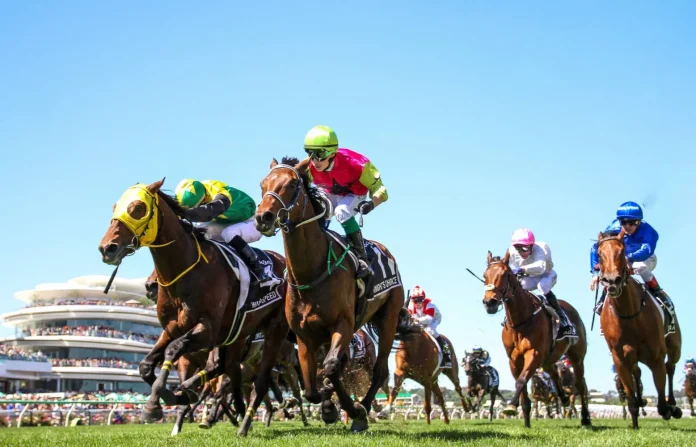

Australia’s most famous horse racing event, the Melbourne Cup, is set to return on Tuesday, 3 November 2026, at the historic Flemington Racecourse in Melbourne, Victoria. Known as “the race that stops a nation”, this prestigious event brings together elite horses, leading jockeys and passionate racing fans from around the world. With an impressive prize pool of A$10.2 million, the 2026 Melbourne Cup promises to be another exciting chapter in Australian sporting history.
A Historic Racing Tradition
First held in 1861, the Melbourne Cup has grown into one of the world’s most celebrated horse races. The 2026 event marks its 166th running, continuing a tradition spanning more than a century and a half.
The race covers 3,200 metres and is classified as a Group 1 handicap race, testing the endurance, speed and determination of both horses and jockeys. Unlike shorter races, the Melbourne Cup requires competitors to maintain their stamina over a demanding distance while making strategic decisions throughout the contest.
Beyond its sporting significance, the Melbourne Cup has become an important part of Australian culture. Each year, millions of people follow the race through television broadcasts, workplace celebrations and social gatherings.
Strong International Competition
The 2026 Melbourne Cup has attracted significant international interest. According to the Victoria Racing Club, 101 horses were originally nominated, including 78 locally trained runners and 23 international entries representing England, Ireland, Japan and the United States.
Among the notable contenders is Half Yours, the defending Melbourne Cup champion, trained by Tony and Calvin McEvoy. The horse is seeking another historic victory following its impressive success in 2025.
Australian trainer Ciaron Maher has also assembled a strong group of contenders, including Point Of Law, while internationally renowned Irish trainer Joseph O’Brien is pursuing his third Melbourne Cup victory.
O’Brien’s entries have included Defiantly, who earned a place in the race through victory in France’s Prix Kergorlay. The international competition highlights the Melbourne Cup’s reputation as a major attraction for some of the world’s finest staying horses.
As of 30 October, the final field has not yet been confirmed. The remaining contenders are competing for places in the 24-horse starting lineup, with final declarations scheduled for Saturday, 31 October.
A Celebration Beyond Horse Racing
Although horse racing is the centrepiece, the Melbourne Cup Carnival offers much more than sporting competition.
The 2026 Carnival runs across four major race days, beginning with Victoria Derby Day on 31 October, followed by Melbourne Cup Day on 3 November, Crown Oaks Day on 5 November and Champions Stakes Day on 7 November.
Fashion remains an essential part of the celebrations. Spectators traditionally attend in elegant dresses, colourful suits and elaborate hats, while the famous Fashions on the Field competition showcases creativity and personal style.
Entertainment is another major attraction. British pop superstar Robbie Williams is scheduled to perform at Flemington on Melbourne Cup Day, adding further excitement to the occasion.
The Carnival also attracts tourists and supports Melbourne’s hospitality, accommodation and retail industries, reinforcing its importance beyond the racetrack.
Anticipation Builds for Race Day
With substantial prize money, international competitors and a rich sporting history, the 2026 Melbourne Cup is shaping up to be a memorable event.
However, the outcome remains uncertain. The demanding distance, changing track conditions, barrier positions and race-day tactics can all influence which horse ultimately crosses the finish line first.
As Australia prepares for the first Tuesday in November, racing enthusiasts eagerly await the moment when the horses charge down Flemington’s famous home straight.
Regardless of the winner, the Melbourne Cup continues to represent a unique combination of sporting excellence, international competition, fashion and Australian tradition.