

Europe’s finest middle-distance horses are preparing to descend on ParisLongchamp for the Group 1 Qatar Prix de l’Arc de Triomphe (2400m) on Sunday, October 4.
With less than two weeks remaining, the field is beginning to take shape following the completion of the major trials in France, Britain and Ireland.
Defending champion Daryz remains the horse they all have to beat after strengthening his position at the head of the market with an authoritative victory in the Group 2 Prix Foy (2400m).
Last year’s Arc winner returned to ParisLongchamp following a disappointing performance behind Ombudsman in the Prince of Wales’s Stakes at Royal Ascot.
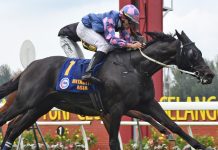
Back on familiar ground, Daryz looked far more comfortable. Mickael Barzalona settled the four-year-old behind the leader before moving smoothly into contention and taking control inside the final stages.
The victory continued his unbeaten record in France this season, following earlier successes in the Prix Ganay and Prix Aga Khan IV.
His defeat at Ascot remains the one significant blemish on his campaign, but proven ability over the Arc course and distance is difficult to overlook.
Attempting to win Europe’s greatest race in successive years presents another challenge, but Daryz will return to ParisLongchamp as the horse carrying the strongest credentials.
Britain’s most prominent three-year-old contender is likely to be Maltese Cross, who has continued to progress since finishing second behind Christmas Day in the Epsom Derby.
The William Haggas-trained colt subsequently captured the Group 1 Grand Prix de Paris (2400m) at ParisLongchamp before confirming his improvement in the Group 2 Great Voltigeur Stakes (2400m) at York.
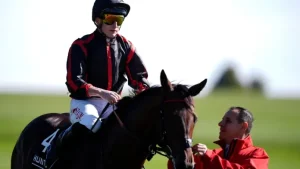
Connections resisted the temptation to stretch him out over the longer distance of the St Leger Stakes, instead keeping the Arc as his primary objective.
That decision could prove significant.
Maltese Cross has already demonstrated that he handles ParisLongchamp and possesses the stamina required for 2400 metres. As a three-year-old, he will also receive weight from the older horses.
His lack of experience against established older champions is the obvious question, but his progressive profile makes him one of the most dangerous runners in the field.
Few horses have assembled a stronger body of form this season than Kalpana.
Andrew Balding’s mare defeated Calandagan in the Group 1 King George VI and Queen Elizabeth Stakes (2400m) at Ascot before adding the Group 1 Yorkshire Oaks (2400m) at York.
Her Yorkshire Oaks victory was far less comfortable, with outsider Sparan Nua reducing the margin to a short head.
However, the race developed unusually after a runaway leader opened a substantial advantage. Kalpana was forced to begin her challenge earlier than ideal and was left vulnerable inside the closing stages.
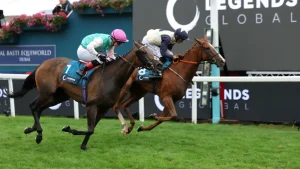
She nevertheless found enough to hold on and secure another Group 1 success.
A previous attempt at the Arc ended with Kalpana finishing seventh after being dealt a difficult wide barrier. She returns as a stronger and more accomplished mare, with victories over some of Europe’s best middle-distance horses.
Her ability to handle rain-affected ground could also prove valuable if Paris receives its traditional autumn weather.
The three-year-old fillies receive an important weight allowance in the Arc, bringing Thundering On firmly into contention.
Joseph O’Brien’s filly produced one of the standout performances of the British Classic season when powering clear in the Group 1 Oaks (2400m) at Epsom.
She subsequently disappointed when fourth in the Pretty Polly Stakes, but it was later reported that she had been coughing after the race.
Following a short break, Thundering On returned to winning form in the Group 2 Blandford Stakes (2000m) at the Curragh on September 13.
That victory demonstrated her wellbeing, although she will now be asked to step back up to 2400 metres against a significantly stronger field.
Her Epsom performance showed that she possesses both the stamina and acceleration required for the Arc. The question is whether she can reproduce that form against older horses on one of racing’s biggest stages.
The French three-year-old challenge gained further strength when Varandir captured the Group 2 Prix Niel (2400m) on Arc Trials Day.
The Aga Khan-owned colt came from off a strong pace to defeat Alam by a length and a quarter, earning an automatic place in the Arc.
The Prix Niel has traditionally been one of the major trials for three-year-olds, although its recent record of producing the Arc winner has been mixed.
Varandir must improve again to trouble the leading contenders, but he will arrive as a progressive colt with winning form over the course and distance.
Those qualities make him difficult to dismiss, particularly if the ground becomes testing.
Another major development from Arc Trials Day was the performance of Friendly Soul in the Group 1 Prix Vermeille (2400m).
James Doyle controlled the race from the front before the John and Thady Gosden-trained mare held off Pink Panthera in a new race-record time.
The victory answered previous questions about her ability to stay 2400 metres and secured the second Group 1 success of her career.
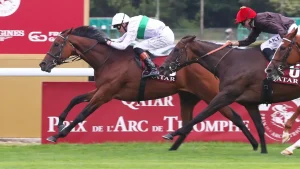
Connections paid a substantial supplementary fee to contest the Prix Vermeille and were rewarded with an automatic Arc invitation.
Whether Friendly Soul takes her place remains subject to final confirmation, but her ability to race prominently could make her particularly dangerous if the Arc develops into a tactical contest.
Aidan O’Brien’s Arc team remains one of the biggest uncertainties heading towards final declarations.
Constitution River looked like a leading contender after winning the Prix du Jockey Club and Eclipse Stakes, but his subsequent performances have raised questions.
He was beaten at York before finishing third as the favourite in the Irish Champion Stakes, weakening late after racing prominently.
O’Brien later revealed that a low-grade infection had affected horses across the Ballydoyle stable for several weeks. That creates further uncertainty over which runners will travel to Paris and whether they can reproduce their best form.
Last year’s Arc runner-up Minnie Hauk also remains in contention.
She was denied by only a head by Daryz in the 2025 Arc but has struggled to rediscover that level this season. A return to 2400 metres should suit, although she must improve considerably on her recent performances.
Unbeaten filly Diamond Necklace is another fascinating possibility following her impressive victory in the Nassau Stakes at Goodwood.
Her acceleration is unquestioned, but she has yet to race over 2400 metres. Connections must decide whether to test her stamina in the Arc or remain at shorter distances.
The final field will not become clear until connections confirm their plans and the supplementary-entry stage is completed.
The barrier draw and weather forecast will also have a significant influence on the market.
A wide starting position can be costly at ParisLongchamp, while soft or heavy ground would bring proven stayers into contention and potentially complicate the challenge of any international runners.
For now, Daryz remains the standard bearer after delivering exactly what was required in the Prix Foy.
Maltese Cross brings a progressive three-year-old profile, Kalpana owns some of the strongest Group 1 form in the field and Thundering On will receive a valuable weight allowance.
Meanwhile, Varandir and Friendly Soul emerged from Arc Trials Day as genuine contenders.
Plenty can still change before October 4, but the defending champion has already issued the clearest warning.
The road to Paris once again runs through Daryz.
By Scott Bailey